The Foreign Legion as a home for orphans
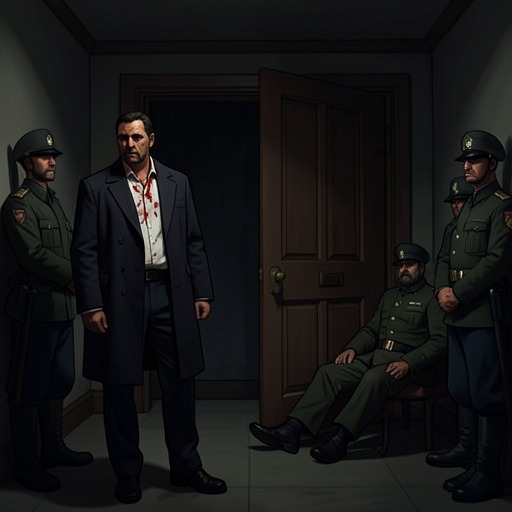
Man on FireThe Foreign Legion as a home for orphans is more than a refuge for soldiers without a country: it is an institution that makes belonging its own purpose and offers a permanent place to men who might otherwise have nowhere to return. The idea informs Guido’s view of the Legion and later gives emotional weight to Creasy’s attempt to find his way back to it.
A Purpose Beyond National Allegiance
Guido discovers that the Legion’s lack of nationalism does not leave it without purpose. Instead, it allows the corps to form an identity of its own. The French public assumes the Legion fights for France and thinks of itself as French, but the account calls this a misconception: the Legion fights for itself, while its role as an instrument of French government policy is incidental. Even French officers find their loyalties drawn more strongly to the Legion than to their country.
That self-contained identity answers the apparent emptiness of an army repeatedly used in futile last stands. The Legion does not need a national cause to supply its members with a reason to belong; the corps generates one through its own shared life. Its soldiers may arrive as outsiders, but their common institution becomes a community in its own right.
The Legion as a Lasting Home
The Legionnaire is described as a “mental orphan,” with the Legion itself as the orphanage. The metaphor is made concrete by the Legion’s policy toward aging soldiers: Guido learns that it is the only army in the world that never retires its men. A Legionnaire too old to fight may remain in the Legion home, or work in its vineyards or handicraft center, if he wishes. He is never forced back into a world he has rejected.
The promise is therefore not limited to shelter during active service. The Legion offers continuity beyond a soldier’s usefulness in battle, allowing him to remain within the community rather than face an imposed departure. In this account, the orphanage is both a figure for the Legion’s emotional identity and a practical arrangement for lifelong belonging.
Creasy's Attempt to Return
The idea becomes personal for Creasy after the Rhodesian war brings his past into focus as a succession of futile conflicts. He loses interest, drinks heavily, lets his body become lethargic, and is removed from operations to serve only as an adviser. The Legion might have dismissed him, but his earlier service earns gratitude; once Creasy recognizes that he is being kept out of charity, pride drives him to leave.
After a woman he had known in Brussels has moved on, Creasy travels to Marseilles and impulsively takes a ferry to Corsica, where the Legion’s main contingent is based. His instinct draws him toward the corps, and the account notes that many years have passed since the 1st R.E.P. mutiny and that the Legion has forgiven him. He imagines that there may still be a home for the orphan. Yet the return remains tentative: after hearing recruits sing “Le Boudin” and seeing their young faces, Creasy feels a thousand years old. He leaves for Bastia and waits for the ferry to Livorno, thinking of visiting Guido and wondering whether they might find a life together that is not futile. The Legion’s refuge is thus real, but the scene ends with Creasy still in motion rather than settled back inside it.